The Black Lantern Cycle
Begin with The Manor That Drank the Road if you want a cursed manor, dangerous hospitality, a road-worn witness, and a mystery built from proof, memory, and debt.
An old-world Gothic fantasy series of cursed places, hidden names, dangerous mercy, and the Black Lantern.
Cael Veyr carries the Black Lantern into haunted places where hospitality, grief, mercy, and memory have become laws powerful enough to erase the people they claim to save.
When mercy becomes law, the Black Lantern bears witness.
The light does not banish what waits in the dark.
The first road
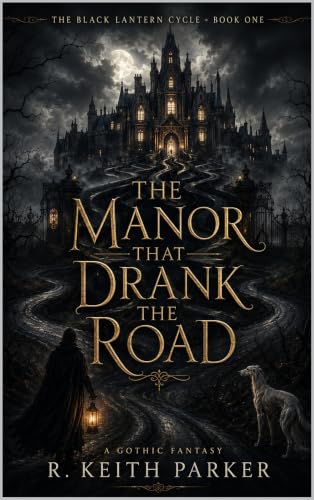
THE MANOR THAT DRANK THE ROAD begins The Black Lantern Cycle with Cael Veyr, the Black Lantern, and Valegast Manor — a house where hospitality is not kindness. It is law.
“The guest book knew his name before he reached the manor.”Begin The Manor That Drank the Road ↗
Available now on Kindle and Kindle Unlimited.
New reader guide
Both cycles are complete entry points into R. Keith Parker’s old-world Gothic fantasy. Choose the kind of road you want to travel first.
Begin with The Manor That Drank the Road if you want a cursed manor, dangerous hospitality, a road-worn witness, and a mystery built from proof, memory, and debt.
Begin with The Salt Road That Fed the Dragon if you want a forbidden valley, a floating lake-city, ancient trade law, political danger, and a hidden debt beneath the road.
No previous reading required. Each cycle offers a clear first book while remaining connected to the larger world of The High Pass Chronicles.
A new road begins
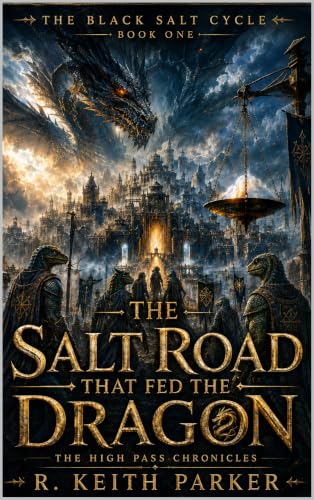
Follow the salt road into a floating city where trade is governed by ancient witness law, every bargain carries a hidden debt, and something beneath the lake has already claimed the road.
A complete old-world Gothic fantasy set within the larger world of The High Pass Chronicles. No previous reading required.
The complete connected catalog
Search all sixteen books across The High Pass Chronicles, The Black Salt Cycle, and The Black Lantern Cycle. Explore titles in production order, follow each series, and open a dedicated record for every book.
Explore the Complete Chronicle →The official reading order
The Black Lantern Cycle is an old-world Gothic fantasy series of haunted roads, ancient houses, buried names, and supernatural laws that punish the desperate for accepting comfort too easily. Books One and Two are available now.
 Published
An Old-World Gothic Fantasy of Guest-Law, Hidden Names, and the Black Lantern
A traveler enters a manor where every welcome becomes a debt.
A third riderless horse and a missing Kaltbrück coach draw Black-Lantern road-witness Cael Veyr to Valegast Manor—a house where welcome is binding, breakfast is judgment, and every kindness can be entered as debt.
Available now on Kindle and Kindle Unlimited.
“Never thank a house for opening its mouth.”
 Published
An Old-World Gothic Fantasy of Stolen Grief, False Mercy, and the Black Lantern
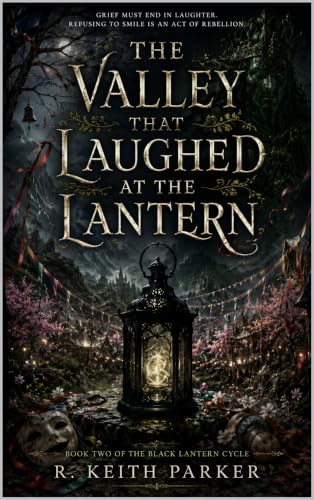
A festival valley turns grief into public joy — and calls it mercy.
Festival ribbons lead Cael into a valley where a grieving mother is required to smile over her child’s coffin. When the Lantern exposes the Bright Passing as false record, Cael and grief-keeper Elyra Thornmere must make a beautiful mercy answer for its cost.
Available now on Kindle and Kindle Unlimited.
“Never ask a mourner to smile so the crowd may call itself kind.”
 Coming next
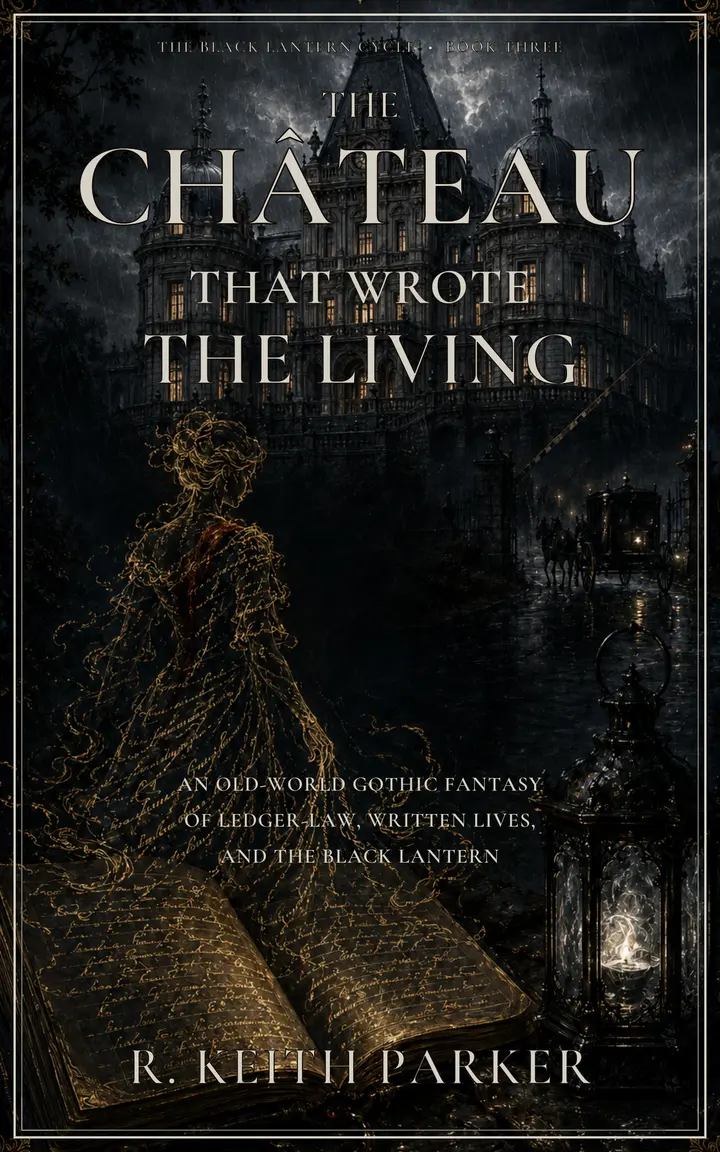
An Old-World Gothic Fantasy of Ledger-Law, Written Lives, and the Black Lantern
At Maison Vaurenne, ledgers do not merely record the living. They assign them. A household of exquisite manners prepares to receive a woman who has already refused to be delivered.
Not every door is an invitation. Not every mercy is kind. And not every road remembers how to leave.
Approved reader reviews
Reader quotations are displayed only with the reviewer’s permission. More responses will be added as the cycle finds its audience.
“I really enjoyed The Manor That Drank the Road. It was haunting and imaginative, but it also had a lot of heart. The mystery and atmosphere stayed with me after I finished.”
— Lisa Ledford, reader
“Dark, powerful, and hard to put down. The story pulled me in, and Cael is a character I won’t forget.”
— Leah Parker, reader
If you have read THE MANOR THAT DRANK THE ROAD or begun it through Kindle Unlimited, an honest review on Amazon or Goodreads helps new readers find the Lantern Road.
Review Book One on Amazon ↗Review Book Two on Amazon ↗Follow on Goodreads ↗Three doors into the Cycle
Begin with spoiler-light passages from the two published novels, then look down the road toward Book Three. The advance text remains subject to final publication edits.
The Manor That Drank the Road
The horse came back without its rider. It came out of the rain at dusk, black from mane to fetlock, one broken rein dragging through the mud and a coach trace snapped against its flank. No blood showed on the saddle. No pack hung from the straps. No human voice followed it down the road. Only the horse. Only the rain.
Only the sound of hooves striking puddles in a measured, exhausted way, as if the animal had walked from a place where running had been forbidden. Cael Veyr stood beneath the old toll stone and let the horse come to him. The stone had once marked the lower road into the Eltwald March, back when lords still counted wheels, hooves, sacks of grain, and men walking beside a cart. Most travelers take the bridge road now. The toll stone had been left to moss, old law, and birds that liked to watch from dead branches.
Cael had come because of the horse. More exactly, he had come because this was the third horse returned in six weeks, and the first two had carried no rider either. The first had belonged to a salt factor. The second had belonged to a chapel courier. This one had pulled the left side of a Kaltbrück coach carrying five named souls: a driver, a wool merchant, the merchant’s wife, her younger brother, and a little girl with a blue ribbon tied around her sleeve so she would not lose herself in rain.
That detail had brought Cael to the toll stone.
The ribbon. People forgot whole households when roads swallowed them. They remembered ribbons. A color could outlive a witness. A thread could accuse longer than a tongue.
Cael knew that too well.
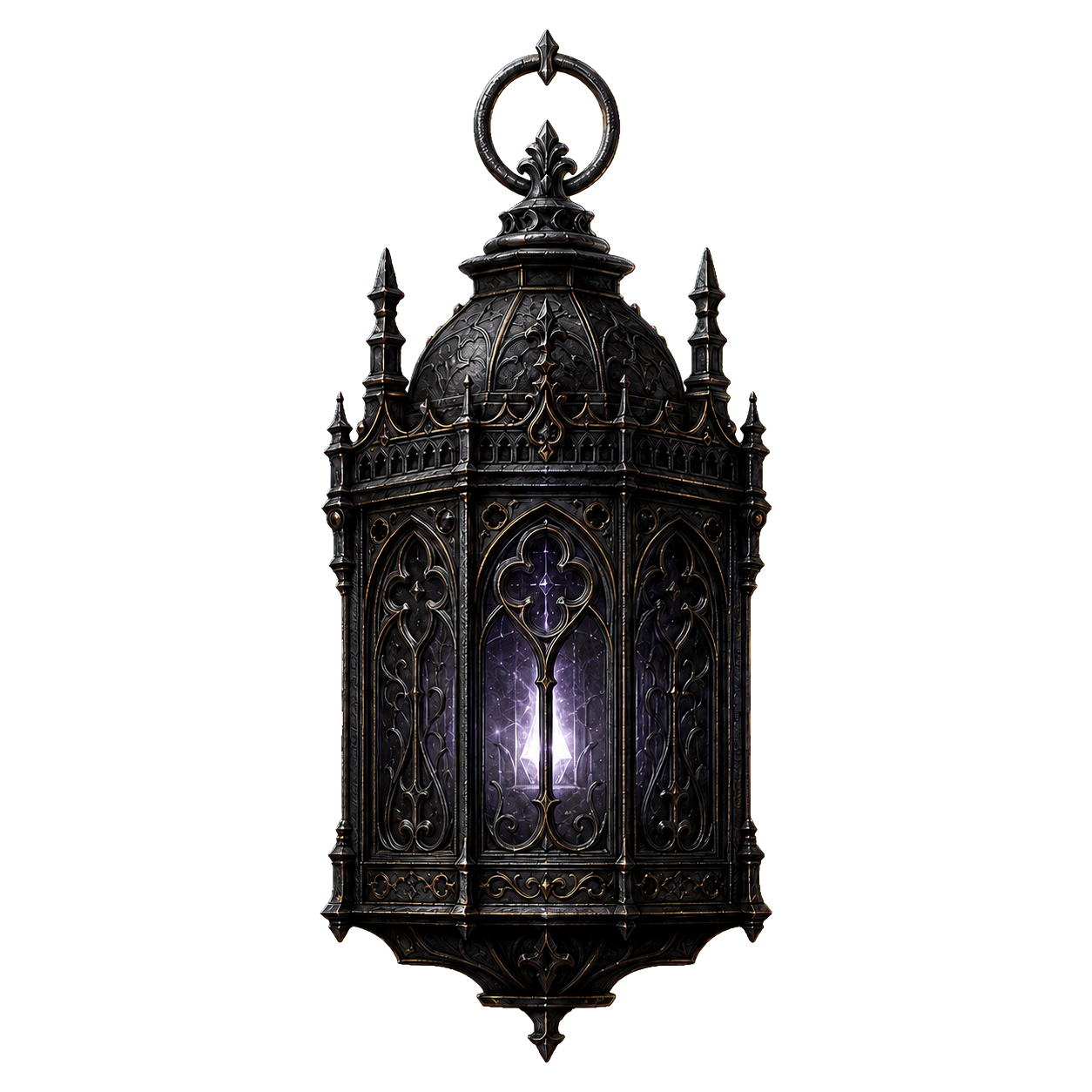
The Black Lantern burned in his left hand. Its flame was not large. It did not throw honest warmth. It sat behind blackened glass and burned the color of old honey until the horse crossed the line of the toll stone. Then the flame bent hard toward the animal. Cael tightened his grip.
“Easy,” he said.
The horse stopped three paces from him, heaving sides. Its eyes rolled white. Rain ran off its jaw and fell in long strings from the bit. The saddle was good mountain leather, recently oiled. The stirrups were a matched pair. One bent backward, not by a fall, but by pressure from below. Cael did not touch the horse at once.
Horses remembered roads better than men remembered promises. He set the butt of his ash spear in the mud and raised the lantern until the dark flame could see the tack. The horse trembled. A leather strap near the left haunch had torn where a coach trace should not have been tied to a riding saddle. Someone had altered the gear in haste. Cael lifted the strap with two fingers.
A wax seal clung to the leather.
Rain had softened it, but not enough to ruin the mark. Three narrow towers. A cup between them. A vine wrapped around the cup’s stem.
House Valegast.
Cael had seen the mark once in an old road ledger from the southern tolls: a noble house of the March, old enough to owe no one an explanation and poor enough, supposedly, to take no guests except in winter charity. Winter charity had a taste in old records. Thin ink. Heavy praise. Missing names. The horse jerked when the lantern flame leaned nearer. Cael lowered the light.
“I know,” he said. “The house had you.”
The Valley That Laughed at the Lantern
The road into the valley wore festival colors before it showed a single house. Ribbons hung from the branch-limbs over the lane, faded where old weather had worried them, but still bright enough to move like cheer in the wind. Red. Saffron. Cream. Blue. Pink gone pale as watered blood. Small bells had been tied among them. They answered the morning in thin silver voices that should have sounded merry.
Instead, they rang with the patience of something practiced too often. Cael Veyr stopped beneath the first of them and listened. The Black Lantern at his side gave no light while shut, but its weight seemed greater here, as if the metal knew before he did that the valley ahead had rules of its own.
He stood with one gloved hand on the lantern’s ring, the other near the ash-wood staff he carried now that the spear from the manor lay broken and gone. The morning had the mild gold of late summer. Orchard country opened ahead in ordered slopes. Whitewashed walls shone through leaves. Pennants moved on distant poles.
He smelled apples, crushed grass, sweet bread, and smoke. Beneath those came the smell he trusted more. Fresh earth. Not the broad smell of farms. Not wet ditch or turned field. A narrow, recent opening. One grave, or something made with the same care. Cael looked left, then right, then down the road again.
“No,” he said softly.
It was not an answer to anyone present. It was the first thing his mouth had learned to do after Valegast Manor: refuse the shape of welcome before welcome could close around him. The road gave no reply. A blackbird rose from the ditch and vanished through the ribbons. Beyond the bend, a painted wagon waited beneath the trees.
It had no horse before it. Its shafts rested on a stone. Laughing suns, green leaves, fiddlers, tumblers, and a horned man in a coat of flowers crowded its sides. Little wooden bells hung from the roof. A puppet box had been built into the rear, its curtain drawn shut with blue ribbon.
On the wagon side, in careful gold letters, someone had written:
SORROW MADE LIGHT.
Cael stood very still. One wooden bell moved though no wind touched it. Another, no larger than a hazelnut, hung beneath the rear axle with black cloth wrapped around its mouth. It did not move at all. He reached into his satchel and took out a small pipe wrapped in soft cloth. It was carved from ash-root, the bowl shaped like a sleeping hound with its nose tucked beneath its tail.
His fingers went to it before they went to prayer, and before prayer they went to proof. He turned it once between thumb and forefinger, feeling the little cuts he had made on a sleepless road three nights ago. Then he set it back.
Beside the pipe lay the small oilcloth carving roll he carried from road to road: a straight knife, a hook knife, two palm gouges, a narrow V-tool, an awl, a little file, a thumb-worn whetstone, waxed cord, and thin blanks of apple, hazel, and pale limewood. He did not carry them for ornament. Pipes, toys, counters, splints, witness pegs—small things. The sort of work a man could do while terror tried to make his hands useless.
He left the pipe wrapped. Smoke could wait until he knew whose ground he stood on. The road bent, and the valley declared itself. An orchard lane opened between old trees trained into careful rows. Blue ribbons circled the trunks at shoulder height. Flower garlands hung from branch to branch. At the far end of the lane, beyond the shifting shade, lay a village spread around a green.
The place was handsome in the way of an old painting that had forgotten what grief cost the people inside it. White plaster. Dark timber. Bright banners. Painted shutters. A bell tower capped in green tiles. In the center, above all, rose a tall wicker figure shaped like a laughing man with antlered horns twined in leaves.
Cael’s gaze moved past it and stopped. Halfway down the orchard lane, under apple boughs and ribbons, a small coffin rested on trestles draped in cream cloth. Flowers covered it. Blue ribbon crossed the lid. A painted cup sat on the bier beside it, filled with something pale-gold and sweet. Three bells lay beside the cup, each no larger than a child’s thumb.
The Château That Wrote the Living
The coach left the Crooked Heron before the inn door had finished closing.
Rain followed it.
Water struck the roof, threaded the windows, and gathered beneath the wheels until every turn of the iron rims sounded as though the road were being torn from wet cloth.
Lucienne sat upon the rear bench with Elyra beside her.
The seat faced forward, though the jolting made the distinction ornamental.
Her empty key-thong knocked softly against her hip.
It had less weight than the household ring.
It hurt more.
Elyra held the oilcloth-wrapped register beneath her left arm. The previously opened fascicle rested beneath the right side of her cloak.
Her traveling dress was fine elven silk in deep emerald, darkened almost to black where the rain had reached it. Electrum-gold thread followed the high collar, fitted seams, and narrow cuffs in patterns of blackthorn, water, and unwritten script. The cloth remained elegant beneath mud and weather because its refinement belonged to the hand that had made it, not to any promise that the road would spare it.
Her blackthorn staff stood braced in the rear corner beside the bench, its crooked head within reach but clear of Lucienne’s wounded shoulder.
One of Elyra’s hands remained near Lucienne without touching her.
Maps from the haunted roads
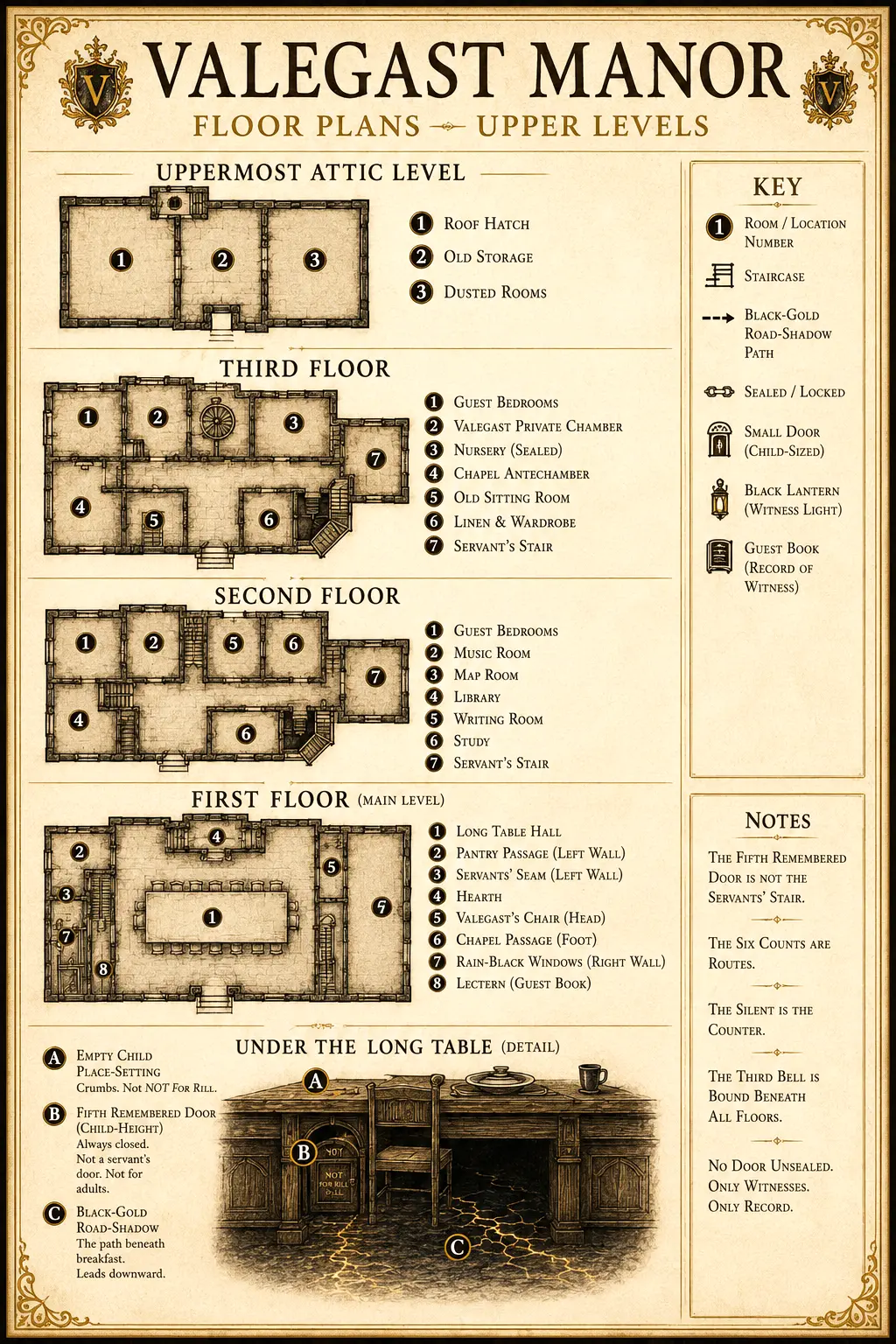
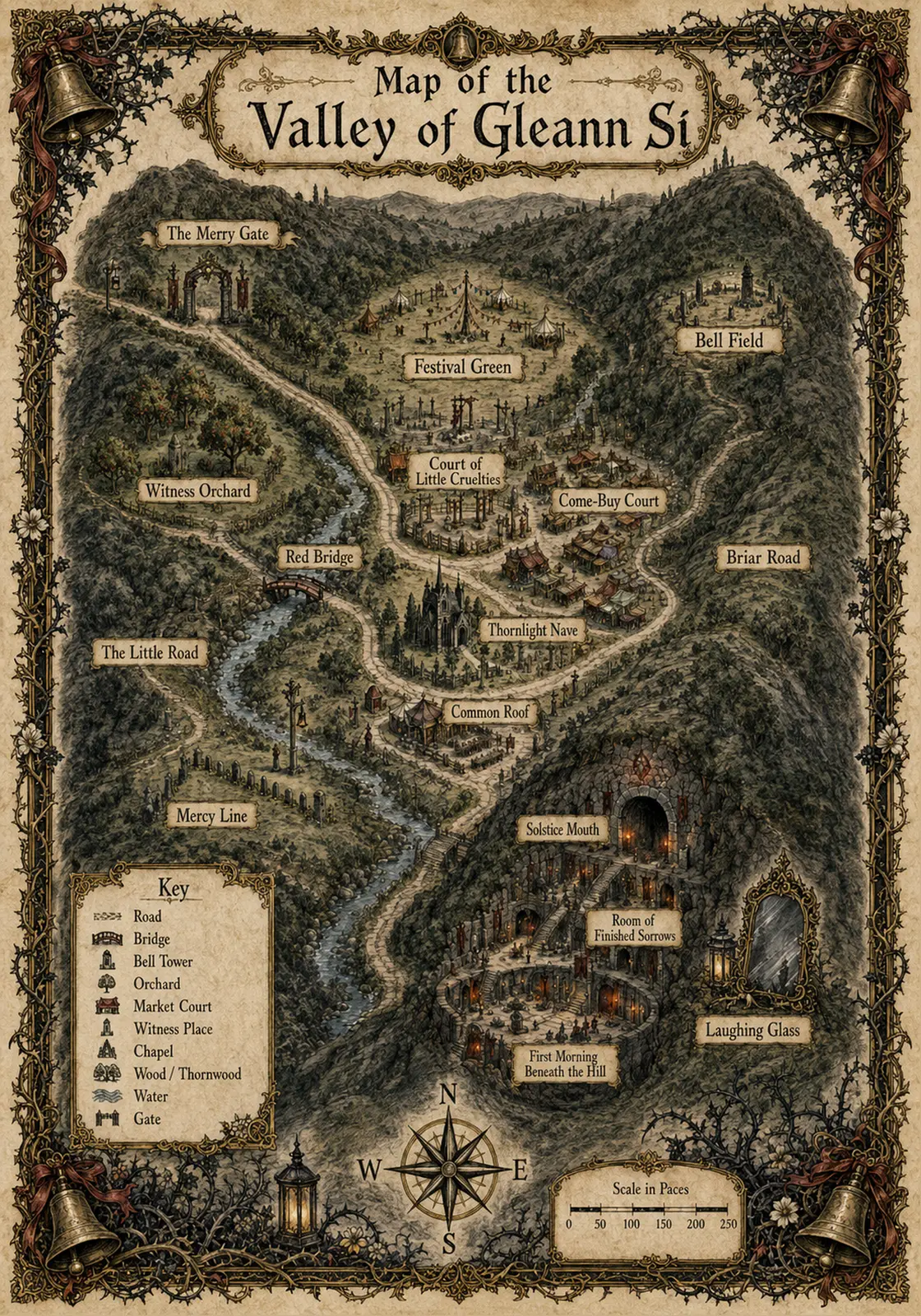
Official interior maps from the published editions. Open either plate to study the routes, thresholds, and witness places in full detail.
The architecture of a haunting
The Black Lantern Cycle treats the supernatural as more than atmosphere. Doors listen. Bells judge. Ledgers assign. Hospitality, laughter, and mercy become perilous when a haunted place is allowed to define their meaning.
Every haunted place has rules it believes are older than justice: guest-law, festival law, household record, and the dangerous grammar of consent.
The Black Lantern does not destroy the darkness. It reveals what the darkness has agreed to call necessary—and who was made to pay for it.
No clever answer is free. Names, years, grief, memory, and mercy become the currency of every supernatural bargain.
The road-worn company
The Lantern travels with people who know that witnessing a wrong is an obligation—not a performance, and never a claim of ownership.
 C
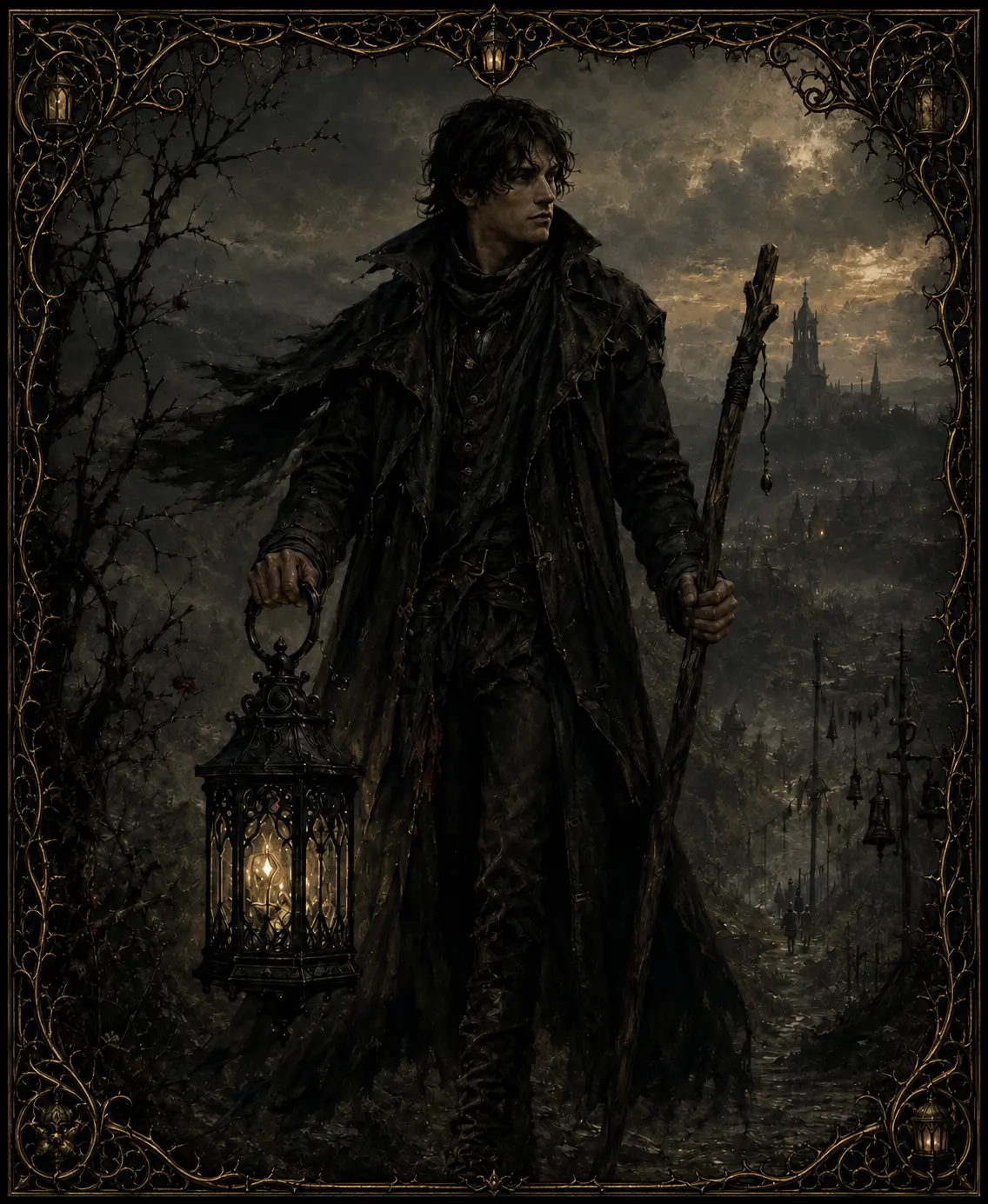
CBlack-Lantern Witness
A road-worn witness who has learned that surviving a haunted law is not the same as answering it.
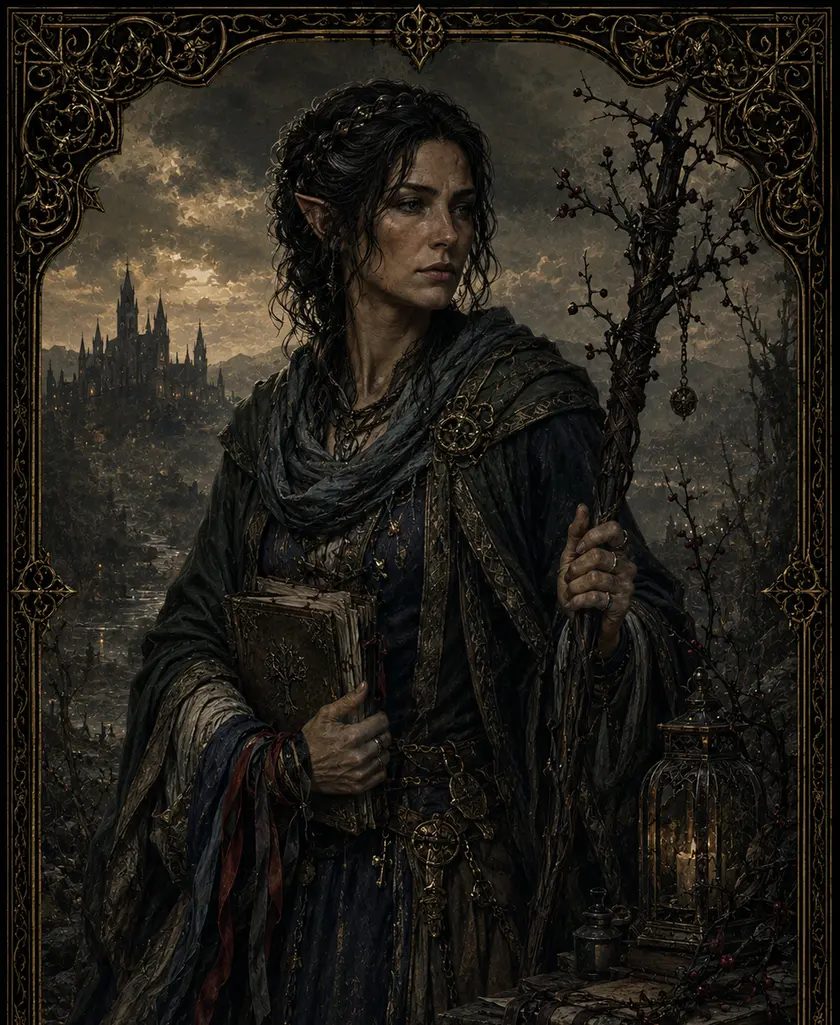 E
EGrief-keeper & song-keeper
Half-elven, exacting, and unwilling to let beauty turn another person’s sorrow into public property.
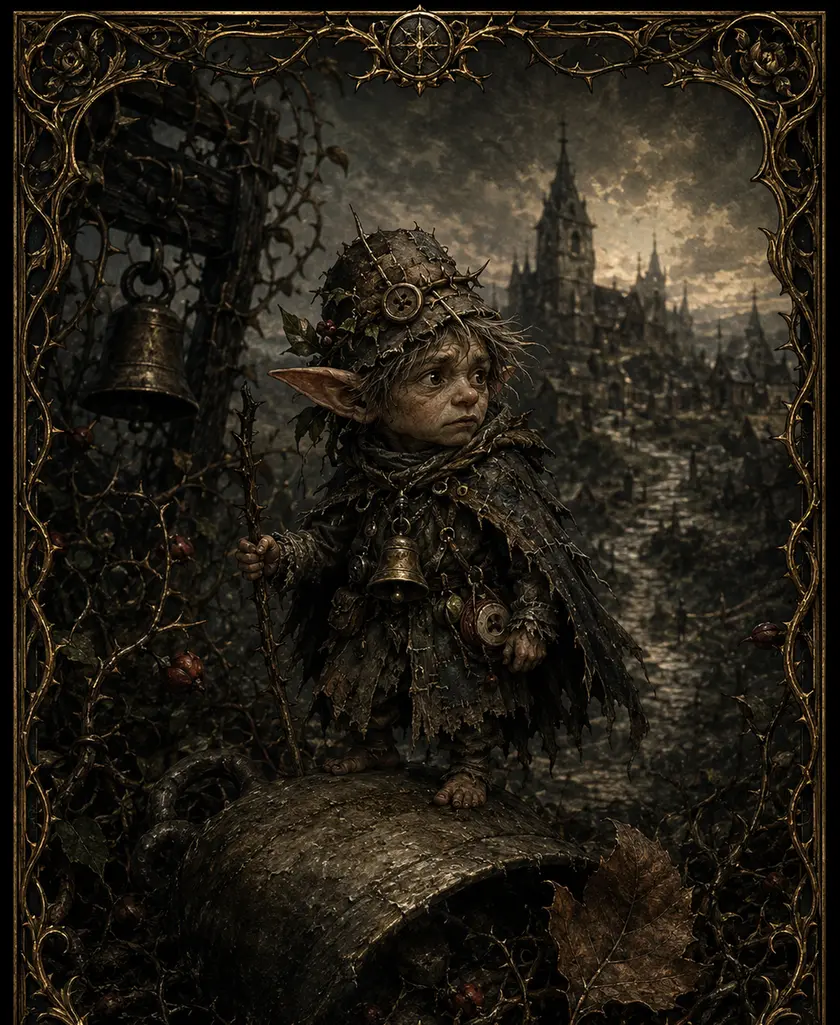 P
PKeeper of Small Apologies
A little fae of the lesser roads whose wit is sharpest when promises begin pretending they were freely made.
Before you take the road
Choose The Manor That Drank the Road for haunted-house Gothic fantasy, or The Salt Road That Fed the Dragon for an expedition into dragons, hidden civilizations, and ancient trade law. Both are designed as clear entry points for new readers.
Yes. The books are written with clear, character-centered storytelling and require no knowledge of R. Keith Parker’s other series. Readers should expect Gothic atmosphere, supernatural danger, grief, and suspense rather than graphic horror.
Each novel confronts a distinct haunting, but the books are best read in order because Cael’s choices, wounds, and companions continue to develop across the cycle.
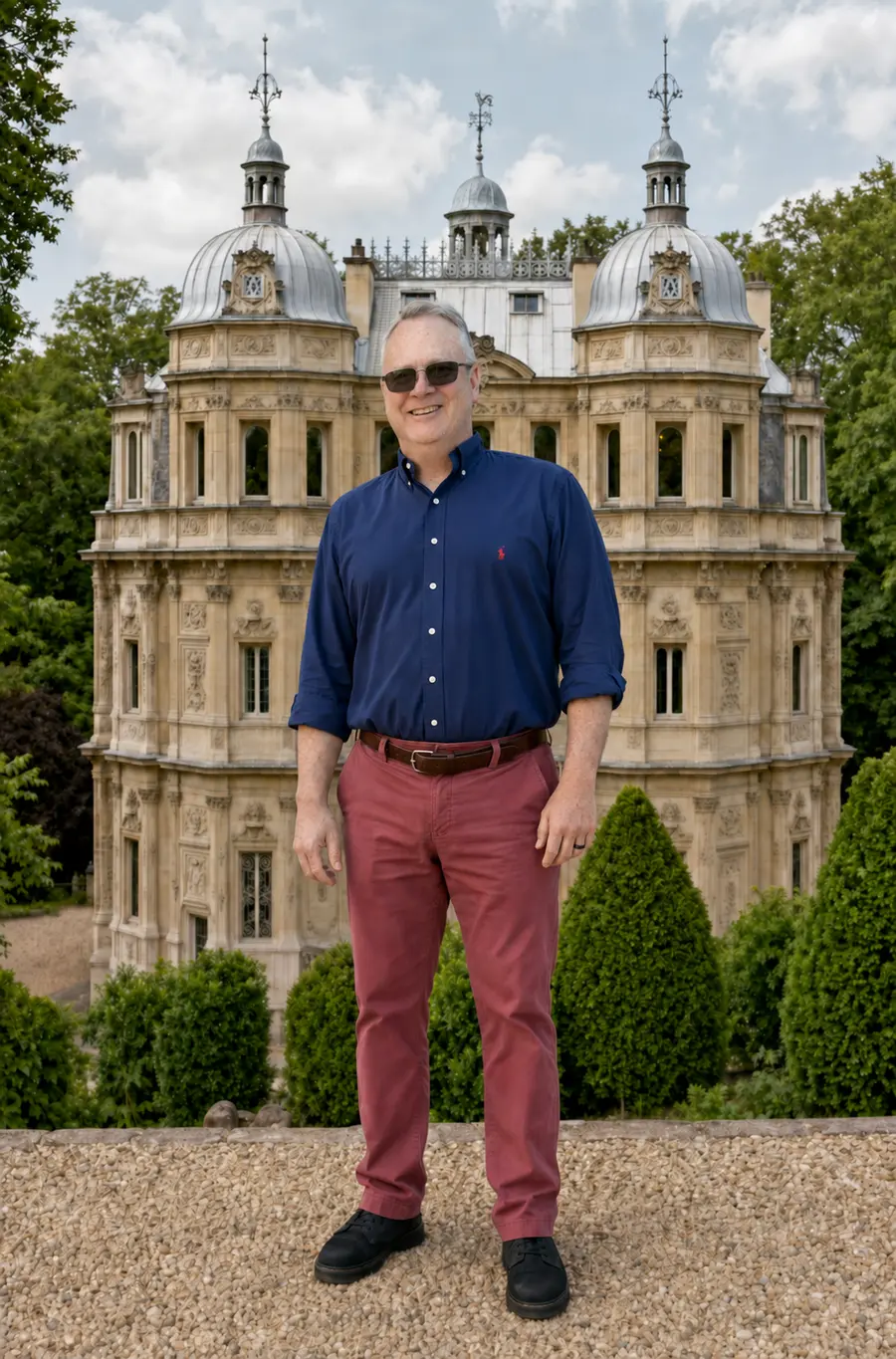
From the author’s desk
New releases, work-in-progress glimpses, cover reveals, and public notes from R. Keith Parker—all gathered through the author’s official channels.
The first road is waiting
Begin THE BLACK LANTERN CYCLE with THE MANOR THAT DRANK THE ROAD — Book One of an old-world Gothic fantasy series of cursed places, hidden names, dangerous mercy, and the Black Lantern.
Start with Book One ↗Available now on Kindle and Kindle Unlimited.